
Affect: Addiction Recovery
Affect TherapeuticsMedical
4.61.38K Reviews
- Version
- 5.14.0
- Installs
- 500.00K
- Age Rating
- Mature 17+
Screenshots
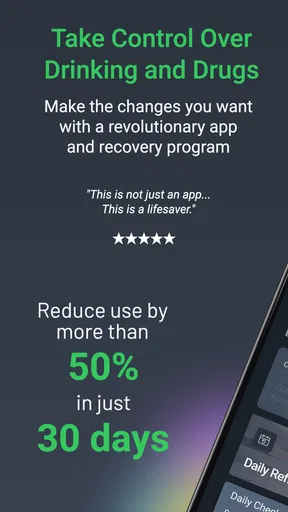
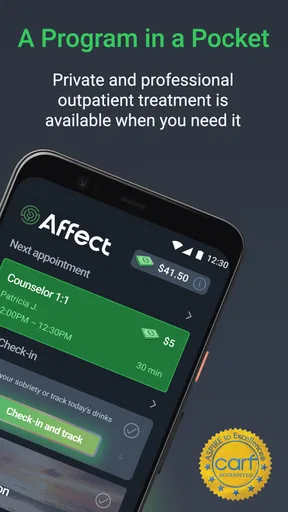
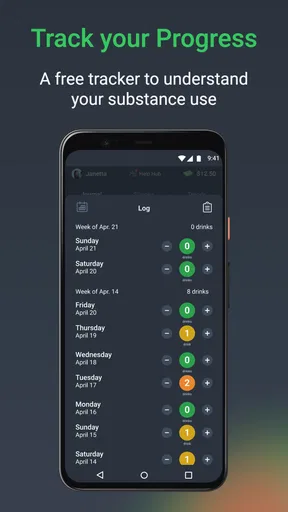
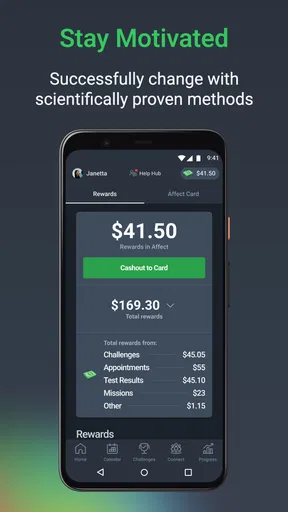
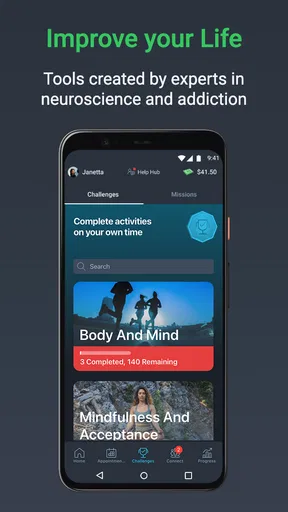
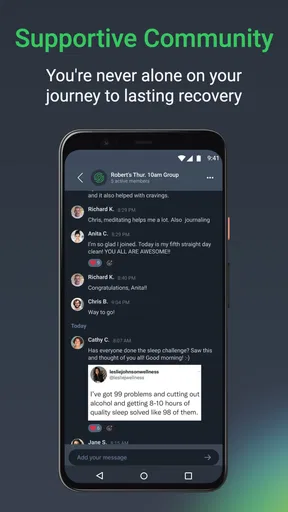
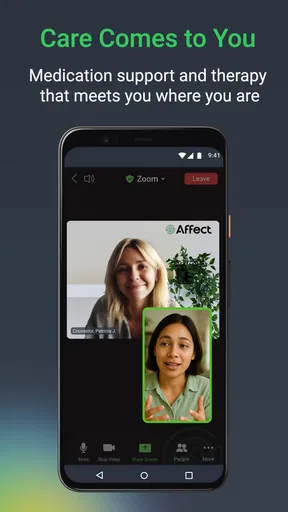
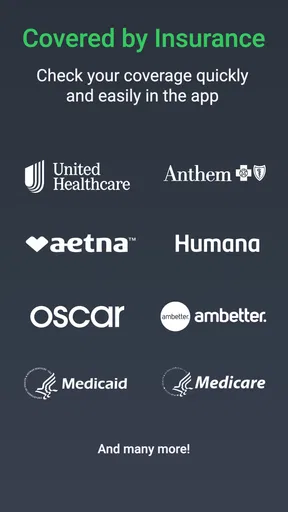
Our Review of Affect: Addiction Recovery
 Analysis by Appyee
Choosing an addiction-recovery app is a personal decision, and I would not treat it like downloading an ordinary habit tracker. Affect: Addiction Recovery is a medical app from Affect Therapeutics aimed at people working to overcome alcohol or drug addiction. I found its strongest value in the way it places recovery support inside a phone-based routine, rather than leaving every difficult moment to memory, willpower, or a search for help at exactly the wrong time.
That convenience also creates a responsibility for the user. This is not an emergency service, a substitute for urgent medical care, or a magic solution that removes cravings. It is better understood as a structured treatment program delivered through an app. If you are looking for practical support that can sit alongside professional care and fit into daily life, it is worth examining. If you need immediate medical supervision, detoxification, or face-to-face crisis intervention, I would look elsewhere first.
Getting past the points where people commonly get stuck
The first obstacle is often emotional rather than technical. Opening an addiction-recovery app can feel like admitting that a private problem needs attention. I think the most useful way to approach Affect is to treat the first session as an orientation, not a test. You do not need to prove that you are already disciplined. You need to be honest enough to understand whether the program matches the kind of help you are seeking.
Another common sticking point is expecting instant results. Recovery rarely follows the neat rhythm of a daily checklist. A difficult evening, a missed session, or a return to substance use does not automatically make the whole program pointless. The practical question is what you do next. Returning to the app promptly, recording what happened as accurately as possible, and using the available treatment guidance is more useful than avoiding the app because the day did not go well.
The app is free to install, which lowers the barrier for someone who wants to explore it without making an immediate financial commitment. That does not mean the experience will suit everyone. Treatment apps can ask for attention at moments when concentration is poor, motivation is low, or privacy is limited. Before starting, I would decide where and when you can use it honestly, rather than assuming every interaction will be convenient.
Its mature seventeen-plus age classification is also important. This is adult-oriented addiction treatment content, not a general wellness app for teenagers. A younger person should involve a trusted adult and an appropriately qualified healthcare professional rather than quietly relying on an app designed for a mature audience.
What I would check before beginning
I would start with the basics: a stable internet connection, enough battery, and a phone operating system that meets the app’s requirement. Affect currently lists version 5.9.0 and supports operating system version 9 or later. Those details matter because an installation problem can look like a treatment problem when the real issue is an older device or an incomplete update.
After installing, I would give myself a few uninterrupted minutes to move through the opening steps. Trying to register while commuting, drinking, arguing with someone, or rushing into work makes it harder to notice what the program is asking. A calm setup also gives you a chance to decide whether the tone, pace, and level of engagement feel appropriate before you depend on the app during a more vulnerable moment.
Privacy is another practical check. I would use a personal device, review the app’s own prompts carefully, and avoid discussing sensitive recovery information aloud in a shared room. I would also make sure I know how to reach a real person or emergency support outside the app. That is not a criticism of Affect; it is a sensible boundary for any digital medical tool.
If the app does not open correctly, I would take the ordinary steps first: close and reopen it, restart the phone, check the connection, and confirm that the operating system and app are current. If the problem remains, I would record the exact screen or message, the time it occurred, and whether it happens repeatedly. That information is far more useful to support than saying only that “it does not work.” I would avoid repeatedly deleting and reinstalling the app if I am unsure how that might affect access to my account or progress.
Building a routine that survives difficult days
In my view, the best way to use this kind of program is to attach it to a predictable part of the day. For example, someone might check in after breakfast, before the evening commute, or once the children are asleep. The exact time is less important than reducing the number of decisions required. When the routine is linked to an existing habit, opening the app becomes a planned action instead of something you must remember while dealing with a craving.
A realistic scenario would be a person who usually drinks after finishing work. Rather than waiting until the urge is intense, they could open the program during the transition between work and home, when the pattern normally begins. The purpose is not to pretend that a phone screen can solve the whole evening. It is to create an earlier pause, notice the risk period, and follow the treatment process before the usual sequence becomes automatic.
That timing is one of the less obvious trade-offs. Using the app only after a crisis has peaked may feel logical, but it gives any digital intervention less room to help. Using it too early or too frequently can feel burdensome. I would experiment with a stable daily window and then add attention around personally predictable high-risk moments, rather than opening it randomly throughout the day.
I would also keep a simple private note about what makes sessions easier or harder: poor sleep, conflict, loneliness, travel, social pressure, or being near a familiar drinking or drug-use setting. The point is not to create another complicated tracking project. It is to identify patterns that can make the app more useful. If a recurring trigger becomes clear, I can discuss it with a clinician or trusted support person instead of treating every lapse as an isolated failure.
One practical strength of an app-based treatment program is continuity. A phone is usually nearby when a person is away from a clinic or meeting. The trade-off is that the same phone contains distractions, messages, work demands, and social pressure. I would use a quiet setting, silence unrelated notifications where possible, and avoid multitasking during a session. A few focused minutes can be more valuable than leaving the program open while scrolling through something else.
Recovering the workflow after a missed session or interruption
People often get stuck after a disrupted routine. Perhaps the phone ran out of power, the connection failed, work became overwhelming, or the user simply avoided the app during a difficult day. My advice is to return at the next reasonable opportunity rather than attempting to recreate every missed moment from memory. Be accurate about what happened, complete the current step, and use the experience to make the next session easier.
If the app appears to have lost your place, I would first check whether I am using the same account and device context as before, then restart the app and connection. I would not invent answers to move forward quickly. In addiction treatment, inaccurate information can make later guidance less relevant. If a technical interruption changes what I can see or submit, I would contact the developer’s support route with a concise description and keep my own note of the important event until the issue is resolved.
A useful recovery rule is to separate technical failure from treatment failure. If a screen will not load, that is a product problem. If I do not want to answer honestly, that is a recovery difficulty. They may happen at the same time, but they need different responses. Restarting the phone cannot solve avoidance, and self-blame cannot repair a broken connection.
I would also avoid using a missed session as a reason to make an extreme promise. Recovery plans are more durable when they are specific and repeatable. The next useful action might be opening the app, contacting a healthcare professional, moving away from a risky environment, or asking someone trustworthy to stay in contact. The app can be part of that sequence, but it should not become the only step.
When the app is not the cause of the difficulty
Sometimes the experience feels ineffective because the underlying situation needs more support than a phone can provide. Severe withdrawal symptoms, confusion, loss of consciousness, thoughts of self-harm, overdose risk, or immediate danger require urgent professional help. I would contact local emergency services or an appropriate crisis resource rather than waiting for an app session to load or expecting a digital program to manage a medical emergency.
The same applies when someone needs supervised detoxification, medication decisions, physical examination, or treatment for another serious health condition. Affect belongs in a broader care plan when those needs exist. It may offer useful structure between appointments, but an app cannot perform the assessment or monitoring that some stages of recovery require.
I would also be cautious if a person strongly prefers in-person accountability. Traditional counseling, peer-support meetings, residential treatment, or a regular clinician may be a better fit for someone who needs human presence to stay engaged. An app is most appealing when accessibility, privacy, and flexible timing matter. It is less suitable when the main barrier is isolation and the person needs reliable face-to-face contact.
Compared with a general sobriety counter, Affect is more treatment-focused. A counter can be helpful for marking time, but it may not offer enough guidance when cravings, shame, or relapse risk become complicated. Compared with a meditation or wellness app, Affect addresses addiction directly rather than treating it as a broad stress-management issue. Compared with a clinic, it is easier to access from home but cannot reproduce physical care, observation, or the full relationship with a treatment team.
That comparison explains who should skip it. I would not choose Affect as the only resource for a medical crisis, a person who cannot safely use a phone in private, or someone who needs immediate in-person supervision. I would also hesitate if the person is unwilling to engage with a structured treatment process and only wants a passive reminder. The app is not simply a motivational wallpaper for the home screen.
What the public response suggests, and what it does not prove
The app has an average rating of 4.5 from around 3.7 thousand ratings, with more than a thousand written reviews, and it has passed 100 thousand installs. Those figures show that many people have been willing to try it and leave feedback, which is encouraging when evaluating a specialized medical app. They do not guarantee that the program will match your clinical needs or that every technical experience will be smooth.
I would read user feedback with a specific question in mind: are reviewers describing the kind of support I actually need? A person praising convenience may have a very different recovery situation from someone seeking supervised care. Likewise, a complaint about routine or accountability might reveal a mismatch in expectations rather than a universal defect. The useful signal is whether the app’s approach fits your schedule, privacy, and willingness to participate.
Because the developer is Affect Therapeutics and the app is categorized as medical, I would approach it with more care than an ordinary lifestyle download. That means reading prompts fully, keeping emergency contacts and offline support available, and discussing the program with a healthcare professional when possible. The fact that it is free makes exploration easier, but it should not lower the standard I use for deciding whether it is safe and appropriate for me.
My practical verdict after looking at the whole experience
I see Affect: Addiction Recovery as a potentially useful bridge between wanting help and fitting treatment into everyday life. Its biggest advantage is not a flashy feature; it is the possibility of bringing a dedicated recovery program into the moments when routines, cravings, and avoidance actually happen. That can be especially valuable for someone who struggles to attend every appointment or wants a consistent digital companion between forms of care.
The app works best when I use it deliberately: set up in a private, calm moment; keep the phone and software ready; choose a repeatable time; return honestly after interruptions; and treat technical problems separately from recovery setbacks. Those habits are not glamorous, but they reduce the friction that causes many health apps to disappear after installation.
My main reservation is the same boundary that applies to every app in this area: digital access is not the same as medical coverage. If the situation is urgent, dangerous, or physically complex, I would choose immediate professional help. If I need human connection above all else, I would add or prioritize in-person support. If I want a structured program that can be accessed from a phone and I am prepared to participate rather than passively monitor a streak, this free medical app is worth considering.
Overall, I would recommend trying it as one part of a recovery plan, not as a promise that the phone can carry the entire burden. The current version, 5.9.0, reflects an actively maintained product, while its mature age classification makes its intended audience clear. For the right person, the most important benefit may be simple: when the difficult moment arrives, a treatment-oriented tool is already close at hand.
Privacy and Permissions
See what permissions an app requests and how it handles your data.
- Calendar
- read calendar events plus confidential information, add or modify calendar events and send email to guests without owners' knowledge
- Location
- approximate location (network-based), precise location (GPS and network-based)
- Phone
- directly call phone numbers, read phone status and identity
- Photos/Media/Files
- read the contents of your USB storage, modify or delete the contents of your USB storage
- Storage
- read the contents of your USB storage, modify or delete the contents of your USB storage
- Camera
- take pictures and videos
- Microphone
- record audio
- Wi-Fi connection information
- view Wi-Fi connections
- Device ID & call information
- read phone status and identity
- Other
- view network connections, pair with Bluetooth devices, access Bluetooth settings, full network access, change your audio settings, control Near Field Communication, run at startup, reorder running apps, draw over other apps, control vibration, prevent device from sleeping, read Google service configuration
Verdict
Strengths of Affect: Addiction Recovery
- Private, nonjudgmental space for tracking recovery progress
- Daily check-ins help users recognize triggers and emotional patterns
- Practical exercises support healthier routines between therapy sessions
- Progress milestones can reinforce motivation and accountability
- Suitable for people at different stages of addiction recovery
Limitations of Affect: Addiction Recovery
- Some features may require a paid subscription
- The app cannot replace professional treatment or emergency support
- Limited value if users do not log in consistently
- Personal recovery data may raise privacy concerns
- Content may not address every type of addiction equally
Similar Picks in This Category
View All
WebMD: Symptom Checker
WebMD, LLC4.1

Microphone Amplifier
DOSA Apps4.2

Anatomy Learning - 3D Anatomy
3D Medical OU4.5

Period Tracker and Calendar
SimpleInnovation4.9

GoodRx: Prescription Coupons
GoodRx4.8

CVS Health
CVS Pharmacy4.5
Frequently Asked Questions
What is Affect: Addiction Recovery, and how does it work?
Affect: Addiction Recovery is a recovery-focused mobile app designed to help users understand their habits, monitor progress, and build healthier routines. It may provide tools such as check-ins, mood or craving tracking, educational content, reflections, and motivational guidance. The experience is intended to support daily recovery efforts, but it should be viewed as a companion tool rather than a replacement for professional treatment or a personalized recovery program.
Is Affect: Addiction Recovery suitable for every type of addiction?
The app can be useful for people working on different behavioral or substance-related recovery goals, but its features may not be equally relevant to every situation. Addiction is highly personal, and recovery needs can vary depending on the substance, behavior, severity, and available support. Before downloading, users should review the app’s current description and consider whether its approach matches their goals. Anyone facing serious dependence should also seek qualified medical or therapeutic assistance.
Can Affect: Addiction Recovery replace a doctor, therapist, or rehabilitation program?
No. Affect: Addiction Recovery should not be treated as a substitute for a doctor, licensed therapist, addiction counselor, detoxification service, or rehabilitation program. An app can encourage self-awareness, consistency, and reflection, but it cannot assess medical risks, manage withdrawal, provide emergency care, or create a complete treatment plan. If stopping a substance could cause dangerous withdrawal symptoms, consult a healthcare professional before making changes, and seek urgent help when there is immediate danger.
Does the app protect my recovery information and personal data?
Before entering sensitive information, users should read Affect: Addiction Recovery’s privacy policy and review the permissions requested by the Android or iOS version. Recovery notes, mood details, cravings, and personal goals can be highly private, so it is important to understand how data is collected, stored, used, and possibly shared. Also check whether the app offers account deletion, data export, passcode protection, or synchronization controls, since these options can differ by platform and update.
Is Affect: Addiction Recovery free to download, and are there in-app purchases?
The download price and available features may vary between the Google Play Store and Apple App Store, and the developer may offer optional subscriptions, premium tools, or in-app purchases. Check the store listing carefully before installing, especially the subscription terms, renewal conditions, trial period, and cancellation instructions. Even when the basic version is free, some tracking, educational, personalization, or support features may require payment, so confirm the current pricing in your region.
